Gold has captivated investors for centuries. Its value shifts with supply and demand, currency strength, and the overall health of the global economy — and traders seek to capitalise on every move.
Gold Market
What Makes Gold a Unique Trading Asset
Gold has a dual role: it’s both a commodity with practical applications and a financial instrument that holds value across time. Unlike most commodities, demand for gold remains consistent regardless of economic conditions. Only 212,500 tonnes have been mined throughout human history, mostly since 1950 — that scarcity is part of what distinguishes it from other assets.
The Global Gold Market Structure
The global gold market involves exchanges, over-the-counter transactions, and major trading hubs. Central banks are major participants; their buying and selling decisions frequently cause substantial price movements. The London Bullion Market Association (LBMA) and futures exchanges like COMEX are the primary venues for price discovery.
Why Consider Gold Trading in Your Investment Portfolio
Gold has long been recognised as a hedge against inflation and market downturns. Here’s why traders and investors keep returning to it.
Gold as a Hedge Against Inflation
Gold tends to hold its purchasing power when currency values decline. During inflationary periods, investors often move into gold as a store of value, which drives prices higher. Historically, gold has appreciated during high-inflation environments — making it a practical hedge rather than just a psychological one.
- Gold’s value tends to increase when currency values decline, providing a natural hedge against inflation.
- During inflationary periods, investors often turn to gold as a store of value, driving up its price.
Portfolio Diversification Benefits
Gold typically shows low or negative correlation with equities and bonds. When stocks fall, gold often holds or rises — which is exactly when diversification matters most.
- Gold’s performance is not directly tied to equities or bonds, reducing overall portfolio risk.
- During market downturns, gold often performs well, offsetting losses in other asset classes.
Gold’s Performance During Economic Uncertainty
Gold has shown consistent resilience during periods of financial market stress. Its safe-haven status draws investors during geopolitical tension and volatility — not because of sentiment alone, but because of its track record across multiple crises.
Key Technical Indicators for Gold
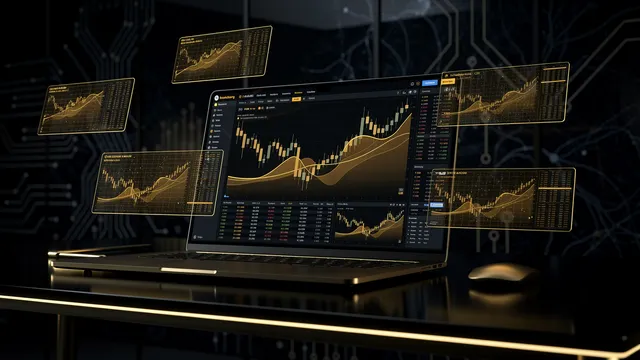
Technical analysis gives gold traders systematic methods for identifying entry and exit points based on historical price patterns and mathematical indicators. Three indicators are worth focusing on:
- Relative Strength Index (RSI) — identifies overbought and oversold conditions
- Moving Average Convergence Divergence (MACD) — confirms trend direction
- Fibonacci retracement levels — marks potential support and resistance zones
Volume matters too. Increasing volume during a price move typically confirms trend strength. Price movement on low volume often signals a potential reversal.
Chart Patterns Specific to Gold Markets
Certain patterns appear with higher reliability in gold markets: double tops and bottoms, head and shoulders formations, and flag patterns that frequently precede significant moves. Pay attention to gold’s price action around key psychological levels — $1,800, $1,900, and $2,000 per ounce have historically acted as significant support or resistance zones.
Incorporating Macroeconomic Data in Your Analysis
Fundamental analysis for gold focuses on macroeconomic factors that drive supply and demand. The economic calendar is an essential tool — watch Federal Reserve announcements, inflation reports, employment data, and geopolitical developments closely.
Combining technical and fundamental analysis lets traders determine the likely direction of gold prices while optimising entry and exit timing. A systematic approach to both keeps decision-making objective and consistent.
Building Your Gold Trading Strategy
Successful gold traders typically start with simpler methods and add complexity as they gain experience. Begin with a clear strategy, test it on a demo account, then transition to live trading with defined risk controls. Maintain realistic expectations about potential returns and drawdowns — and apply your rules consistently.
FAQ
What are the different ways to invest in the precious metal market?
Investors can access the market through physical bullion, exchange-traded funds (ETFs), futures contracts, and contracts for difference (CFDs). Each method offers distinct advantages and considerations.
How do interest rates affect the value of this precious metal?
Changes in interest rates can significantly influence the price. When interest rates rise, the opportunity cost of holding non-yielding assets like bullion increases, potentially reducing demand. Conversely, lower interest rates can make it more attractive.
What is the relationship between the US dollar and the price?
The value of the US dollar has a significant impact on the price. A weaker dollar can make it cheaper for investors holding other currencies, potentially increasing demand and driving up the price.
How can I manage risk when speculating on price movements?
Effective risk management involves strategies such as position sizing, setting stop-loss orders, and maintaining a favourable risk-reward ratio. Understanding the impact of leverage on your investments is also essential.
What is the significance of supply and demand dynamics in determining the price?
The price is influenced by the balance between supply and demand. Factors such as mining production, central bank reserves, and jewellery demand can all impact the price.
Can I use a demo account to practice speculation without risking real capital?
Yes, many platforms, including [Investofil], offer demo accounts that allow you to practice with virtual funds, helping you develop your strategies and gain experience without financial risk.
How do geopolitical events and market sentiment affect price movements?
Geopolitical tensions and market sentiment can significantly influence the price. During times of uncertainty, investors often seek safe-haven assets, driving up demand and prices.